

VERY nice tool for analyzing CGGTTS files

Hello Time-Nuts,
Wishing all a very Happy New Year!
Just wanted to make the list aware of a very nice tool that I have
discovered. I have been playing around with common view GPS observations
to compare my house reference to NIST. USNO and AMCT also produce their
CGGTTS files, but their web page is down for reconstruction. Coming up the
learning curve has soaked up waayy too many hours, but the results have
been gratifying.
CGGTTS files are in ASCII format and are produced for each station so that
GNSS satellites that are in common view can be used to compare their
clocks. NIST publishes their file daily, you can check out
tf.nist.gov/NIST_GPS/NIST_.gps to see what the file looks like.
Producing the CGGTTS file for your local site can be interesting. I
drive a Trimble NetRS with my house reference, produce .T00 files, process
them with Trimble convertToRinex, then use R2CGGTTS to generate my CGGTTS
file. I have written a Python program that goes out and grabs all the
data, does all the file processing, and prepares the NIST and local CGGTTS
files for analysis.
This is where the really neat tool comes in. BIPM and IEEE have written a
tool that runs on a web browser to compare the CGGTTS files. The software
is on github at - GitHub - TheBIPM/CCTF_CBKT_software
https://github.com/TheBIPM/CCTF_CBKT_software . It will take one (or
more) CGGTTS files for two stations and plot the individual station clocks
as well as the differenced common view solution. It also produces csv
files of the data (though they use tab instead of comma, so you have to
rename it something besides csv to get it into Excel).
One really nice feature of this is that you are comparing to UTC(nist)
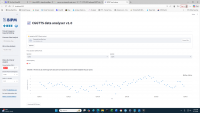
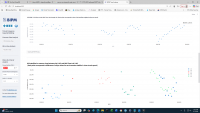
directly, instead of UTC(gps). I have attached a couple of screenshots of
the (partial) output. Enjoy. I hope to publish some data in the
relatively near future of this work and comparisons to three other GPS
receivers.
Regards,
Skip Withrow

Hi
At least according to this:
http://www.openttp.org/downloads/MosaicT_IFCS-EFTF_2021_paper.pdf
The Mosaic-T will also “play nice” with CGGTTS files as an output. Are there “tangles” in the generation process? I don’t (yet) know. It appears that the “stock” firmware and support software handles their generation.
It appears that the modern uBlox stuff can do CGGTTS. A quick search suggests the generation process is a bit complex. It looks like a log the raw data and convert from there with this or that sofware sort of process.
Bob
On Jan 7, 2026, at 6:28 PM, Skip Withrow via time-nuts time-nuts@lists.febo.com wrote:
Hello Time-Nuts,
Wishing all a very Happy New Year!
Just wanted to make the list aware of a very nice tool that I have
discovered. I have been playing around with common view GPS observations
to compare my house reference to NIST. USNO and AMCT also produce their
CGGTTS files, but their web page is down for reconstruction. Coming up the
learning curve has soaked up waayy too many hours, but the results have
been gratifying.
CGGTTS files are in ASCII format and are produced for each station so that
GNSS satellites that are in common view can be used to compare their
clocks. NIST publishes their file daily, you can check out
tf.nist.gov/NIST_GPS/NIST_.gps to see what the file looks like.
Producing the CGGTTS file for your local site can be interesting. I
drive a Trimble NetRS with my house reference, produce .T00 files, process
them with Trimble convertToRinex, then use R2CGGTTS to generate my CGGTTS
file. I have written a Python program that goes out and grabs all the
data, does all the file processing, and prepares the NIST and local CGGTTS
files for analysis.
This is where the really neat tool comes in. BIPM and IEEE have written a
tool that runs on a web browser to compare the CGGTTS files. The software
is on github at - GitHub - TheBIPM/CCTF_CBKT_software
https://github.com/TheBIPM/CCTF_CBKT_software . It will take one (or
more) CGGTTS files for two stations and plot the individual station clocks
as well as the differenced common view solution. It also produces csv
files of the data (though they use tab instead of comma, so you have to
rename it something besides csv to get it into Excel).
One really nice feature of this is that you are comparing to UTC(nist)
directly, instead of UTC(gps). I have attached a couple of screenshots of
the (partial) output. Enjoy. I hope to publish some data in the
relatively near future of this work and comparisons to three other GPS
receivers.
Regards,
Skip Withrow
<CGGTTS_Analyser_1.png><CGGTTS_Analyser_2.png>_______________________________________________
time-nuts mailing list -- time-nuts@lists.febo.com
To unsubscribe send an email to time-nuts-leave@lists.febo.com
Yes, the Septentrio PolaRx5-T and Mosaic-T will both produce CGGTTS files
natively. You can check out their manuals on how to set it up. The
Mosaic-T does need an authorization code to enable external reference input
(plus the hardware hooks in place). Anybody know how much it costs, and is
it one time only or subscription? The PolaRx5-TR has an external clock
input, but new from the factory I think they are in the $15k range.
Otherwise, any receiver that will produce a RINEX format file (and
preferably has external clock input) can be used. The RINEX files are
processed with R2CGGTTS to produce the CGGTTS file. There are a few twists
and turns in this process, but once figured out it is quite
straightforward. I'm willing to share notes with those interested.
You can even get CGGTTS files from a receiver that does not have an
external clock reference IF you add an external time interval counter.
There is a project on github called OpenTTP that does this - GitHub -
openttp/openttp: A platform for traceable time and frequency
https://github.com/openttp/openttp It can use several different receivers
and counters, the Ublox F9T with TICC looks attractive. However, I have
not attempted this project (some software assembly required).
Skip Withrow
On Thu, Jan 8, 2026 at 10:36 AM Bob kb8tq kb8tq@n1k.org wrote:
Hi
At least according to this:
http://www.openttp.org/downloads/MosaicT_IFCS-EFTF_2021_paper.pdf
The Mosaic-T will also “play nice” with CGGTTS files as an output. Are
there “tangles” in the generation process? I don’t (yet) know. It appears
that the “stock” firmware and support software handles their generation.
It appears that the modern uBlox stuff can do CGGTTS. A quick search
suggests the generation process is a bit complex. It looks like a log the
raw data and convert from there with this or that sofware sort of process.
Bob
On Jan 7, 2026, at 6:28 PM, Skip Withrow via time-nuts <
time-nuts@lists.febo.com> wrote:
Hello Time-Nuts,
Wishing all a very Happy New Year!
Just wanted to make the list aware of a very nice tool that I have
discovered. I have been playing around with common view GPS observations
to compare my house reference to NIST. USNO and AMCT also produce their
CGGTTS files, but their web page is down for reconstruction. Coming up the
learning curve has soaked up waayy too many hours, but the results have
been gratifying.
CGGTTS files are in ASCII format and are produced for each station so that
GNSS satellites that are in common view can be used to compare their
clocks. NIST publishes their file daily, you can check out
tf.nist.gov/NIST_GPS/NIST_.gps to see what the file looks like.
Producing the CGGTTS file for your local site can be interesting. I
drive a Trimble NetRS with my house reference, produce .T00 files, process
them with Trimble convertToRinex, then use R2CGGTTS to generate my CGGTTS
file. I have written a Python program that goes out and grabs all the
data, does all the file processing, and prepares the NIST and local CGGTTS
files for analysis.
This is where the really neat tool comes in. BIPM and IEEE have written a
tool that runs on a web browser to compare the CGGTTS files. The software
is on github at - GitHub - TheBIPM/CCTF_CBKT_software
https://github.com/TheBIPM/CCTF_CBKT_software . It will take one (or
more) CGGTTS files for two stations and plot the individual station clocks
as well as the differenced common view solution. It also produces csv
files of the data (though they use tab instead of comma, so you have to
rename it something besides csv to get it into Excel).
One really nice feature of this is that you are comparing to UTC(nist)
directly, instead of UTC(gps). I have attached a couple of screenshots of
the (partial) output. Enjoy. I hope to publish some data in the
relatively near future of this work and comparisons to three other GPS
receivers.
Regards,
Skip Withrow
<CGGTTS_Analyser_1.png><CGGTTS_Analyser_2.png>
time-nuts mailing list -- time-nuts@lists.febo.com
To unsubscribe send an email to time-nuts-leave@lists.febo.com
Hi
I can find very little about CGGTTS in the Mosaic-T manuals I have. Most of what I can find routes me to the Septentrio RX Tools software. It appears to simply be doing about the “same thing” as R2CGGTTS.
Looking at the “Permitted Capabilities” list on a typical Mosaic-T:
Frequency Sync is enabled
Time Sync is enabled
Event Tracking is enabled
That and a lot of other stuff are all enabled by default.
The main stuff that is disabled by default is pretty much all moving base / DGNSS / RTK related. My understanding is that the CPU isn’t up to doing full RTK on top of the fancy timing work. I could easily be wrong ….
Any hints on docs for onboard CGGTTS for the Mosiac-T (as opposed to the PolaRx5)?
Bob
On Jan 8, 2026, at 3:43 PM, Skip Withrow skip.withrow@gmail.com wrote:
Yes, the Septentrio PolaRx5-T and Mosaic-T will both produce CGGTTS files natively. You can check out their manuals on how to set it up. The Mosaic-T does need an authorization code to enable external reference input (plus the hardware hooks in place). Anybody know how much it costs, and is it one time only or subscription? The PolaRx5-TR has an external clock input, but new from the factory I think they are in the $15k range.
Otherwise, any receiver that will produce a RINEX format file (and preferably has external clock input) can be used. The RINEX files are processed with R2CGGTTS to produce the CGGTTS file. There are a few twists and turns in this process, but once figured out it is quite straightforward. I'm willing to share notes with those interested.
You can even get CGGTTS files from a receiver that does not have an external clock reference IF you add an external time interval counter. There is a project on github called OpenTTP that does this - GitHub - openttp/openttp: A platform for traceable time and frequency https://github.com/openttp/openttp It can use several different receivers and counters, the Ublox F9T with TICC looks attractive. However, I have not attempted this project (some software assembly required).
Skip Withrow
On Thu, Jan 8, 2026 at 10:36 AM Bob kb8tq <kb8tq@n1k.org mailto:kb8tq@n1k.org> wrote:
Hi
At least according to this:
http://www.openttp.org/downloads/MosaicT_IFCS-EFTF_2021_paper.pdf
The Mosaic-T will also “play nice” with CGGTTS files as an output. Are there “tangles” in the generation process? I don’t (yet) know. It appears that the “stock” firmware and support software handles their generation.
It appears that the modern uBlox stuff can do CGGTTS. A quick search suggests the generation process is a bit complex. It looks like a log the raw data and convert from there with this or that sofware sort of process.
Bob
On Jan 7, 2026, at 6:28 PM, Skip Withrow via time-nuts <time-nuts@lists.febo.com mailto:time-nuts@lists.febo.com> wrote:
Hello Time-Nuts,
Wishing all a very Happy New Year!
Just wanted to make the list aware of a very nice tool that I have
discovered. I have been playing around with common view GPS observations
to compare my house reference to NIST. USNO and AMCT also produce their
CGGTTS files, but their web page is down for reconstruction. Coming up the
learning curve has soaked up waayy too many hours, but the results have
been gratifying.
CGGTTS files are in ASCII format and are produced for each station so that
GNSS satellites that are in common view can be used to compare their
clocks. NIST publishes their file daily, you can check out
tf.nist.gov/NIST_GPS/NIST_.gps http://tf.nist.gov/NIST_GPS/NIST_.gps to see what the file looks like.
Producing the CGGTTS file for your local site can be interesting. I
drive a Trimble NetRS with my house reference, produce .T00 files, process
them with Trimble convertToRinex, then use R2CGGTTS to generate my CGGTTS
file. I have written a Python program that goes out and grabs all the
data, does all the file processing, and prepares the NIST and local CGGTTS
files for analysis.
This is where the really neat tool comes in. BIPM and IEEE have written a
tool that runs on a web browser to compare the CGGTTS files. The software
is on github at - GitHub - TheBIPM/CCTF_CBKT_software
https://github.com/TheBIPM/CCTF_CBKT_software . It will take one (or
more) CGGTTS files for two stations and plot the individual station clocks
as well as the differenced common view solution. It also produces csv
files of the data (though they use tab instead of comma, so you have to
rename it something besides csv to get it into Excel).
One really nice feature of this is that you are comparing to UTC(nist)
directly, instead of UTC(gps). I have attached a couple of screenshots of
the (partial) output. Enjoy. I hope to publish some data in the
relatively near future of this work and comparisons to three other GPS
receivers.
Regards,
Skip Withrow
<CGGTTS_Analyser_1.png><CGGTTS_Analyser_2.png>_______________________________________________
time-nuts mailing list -- time-nuts@lists.febo.com mailto:time-nuts@lists.febo.com
To unsubscribe send an email to time-nuts-leave@lists.febo.com mailto:time-nuts-leave@lists.febo.com